Companies Hiring Nurses to Work From Home

Finding legitimate work from home RN jobs requires understanding which industry sectors actively recruit virtual clinicians, what licensing rules apply across state lines, and how home office setups must comply with federal privacy standards. Whether you are looking to transition away bedside shifts or manage chronic care pathways virtually, healthcare organizations recruit registered nurses for various telephonic, digital health, and clinical review positions.
Types of Companies Hiring Remote Nurses
Virtual healthcare employment spans several distinct business models. Telehealth platforms and virtual urgent care providers hire registered nurses to perform live patient triage, symptom evaluation, and preliminary care coordination via video or telephone interfaces. Health insurance providers and managed care organizations employ virtual nurses in large numbers to review treatment plans, oversee utilization management, and manage complex disease states. Meanwhile, digital health startups and remote patient monitoring firms hire clinicians to analyze physiological data streams and guide patients using connected monitoring devices.
Another major sector includes clinical auditing, healthcare technology, and data analytics firms. These entities hire nurses to evaluate medical records for billing accuracy, quality assurance, and regulatory compliance. Each sector demands different nursing backgrounds, ranging from acute care bedside experience to familiarity with insurance policies and healthcare coding guidelines.
Top Remote Nurse Employers by Industry Sector
To help you target your job search, remote nurse employers can be organized by their core industry sector, primary role types, and typical licensing expectations. Reviewing these sectors helps clarify where your clinical background fits best.
| Industry Sector | Common Remote RN Roles | Primary License Expectation | Representative Employer Focus |
|---|---|---|---|
| Remote Patient Monitoring | Patient Coordinator, Monitoring RN | Compact RN License or State Authorization | Cadence Care and similar tech-enabled chronic disease platforms |
| Clinical Auditing & Technology | Medical Review Auditor, Clinical Analyst | RN/LPN; coding certification often preferred | Cotiviti and specialized healthcare analytics firms |
| Home Health & Palliative Care | Care Transitions Coordinator, Telehealth RN | State-specific or Multi-state Compact License | Amedisys and national home health networks |
| Health Plans & Managed Care | Utilization Review, Case Manager, Triage RN | Multi-state or Individual State License | Large national insurance providers and managed care organizations |
When evaluating these opportunities, it helps to review broader career pathways and continuing education options that support transitions into specialized roles, such as understanding specialized clinical frameworks detailed in our guide on biotechnology nursing jobs.
Essential Qualifications and Licensure Requirements for Work From Home RN Jobs
Securing work from home RN jobs depends heavily on holding the correct nursing credentials and understanding how state borders affect your practice. If your employer or patient base spans multiple states, understanding the Nurse Licensure Compact (NLC) is essential. The NCSBN Nurse Licensure Compact (NLC) outlines how a multistate license allows a registered nurse to practice in all compact states without obtaining individual single-state licenses. However, if your employer operates in or serves patients located in non-compact states, you must hold a valid active license issued by that specific state board of nursing.
Most employers also require a minimum of two to five years of clinical bedside experience, active Basic Life Support (BLS) certification, and a clean professional licensing record. Specialty roles like utilization review or medical auditing often value previous discharge planning, case management, or documentation experience over active bedside care.
Technical and Home Office Setup Standards
Virtual healthcare employers enforce strict technical and physical workspace requirements to maintain data security and uninterrupted patient communication. Because you handle protected health information (PHI) from a residential setting, meeting these benchmarks is mandatory during the hiring process.
- Dedicated Workspace: A private, secure room with a locking door to prevent unauthorized household members or visitors from viewing patient records or hearing confidential calls.
- High-Speed Internet: A reliable hardwired broadband internet connection meeting minimum upload and download speed thresholds specified by the employer, usually prohibiting unsecured public Wi-Fi or satellite networks.
- Hardware Specifications: A modern encrypted desktop or laptop computer, dual monitors, and an employer-issued security token or virtual private network (VPN) client.
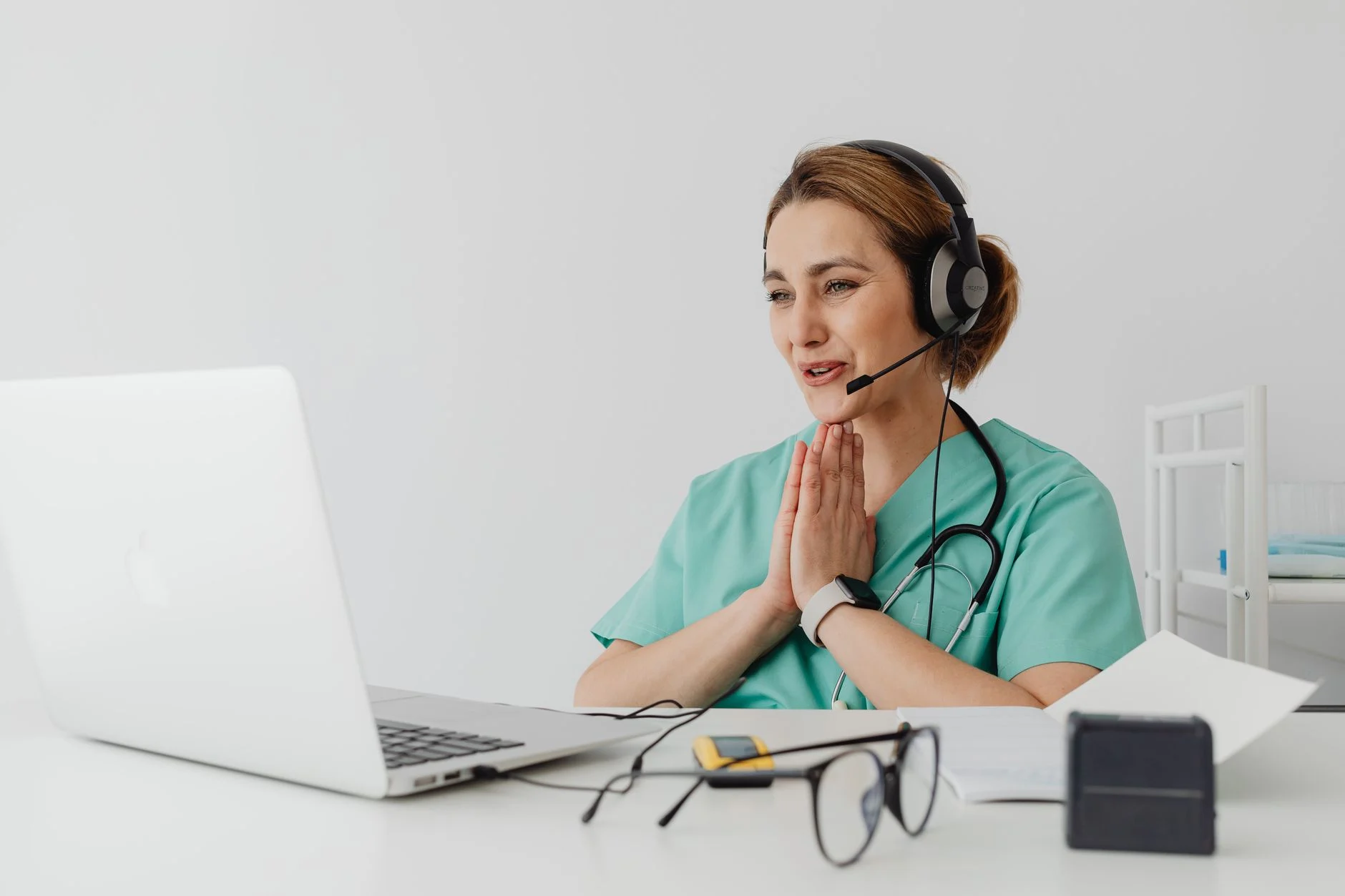
- Audio Equipment: A noise-canceling headset to ensure clear telephone communication during patient triage or clinical interviews without background interference.
Maintaining professional ethics and data privacy compliance is a foundational duty in any remote healthcare role. To stay current on legal and ethical obligations, nurses frequently complete continuing education such as ethics ce for nurses to reinforce patient confidentiality standards.
Compensation Structures and Employment Models
Remote nursing positions utilize diverse employment arrangements, ranging from traditional corporate W-2 structures to independent 1099 contractor agreements or PRN schedules. Understanding these classifications helps you evaluate total compensation, tax withholding, and benefit eligibility before accepting an offer.
W-2 employment typically includes health insurance, paid time off, retirement matching, and employer-provided equipment or technology stipends. Conversely, 1099 independent contractor roles or hourly project-based auditing positions may offer higher hourly wages but require you to manage your own self-employment taxes, professional liability insurance, and workspace expenses. Companies that hire remote nurses structure their pay scales around geographic labor markets, clinical specialty certifications, and prior utilization review experience rather than uniform national salary schedules.
Next Steps for Your Remote Nursing Career
Transitioning to virtual nursing requires auditing your current license standing, upgrading your home office environment, and tailoring your resume to highlight documentation, communication, and computer literacy skills. Review active listings directly on primary employer career portals and verify your multistate licensing privileges before submitting applications.
Frequently Asked Questions
Do I need a multi-state nursing license to work from home?
A multi-state compact license is required if your employer or patients reside in participating compact states. If your employer or patients are located in a non-compact state, you must hold an active single-state nursing license issued by that specific jurisdiction's board of nursing.
What are the most common entry-level remote nursing jobs?
Common entry-level remote positions include telehealth triage nurse, utilization review coordinator, remote patient monitoring specialist, and telephonic case manager. Many of these roles prefer candidates with several years of direct bedside clinical experience.
Are remote nursing positions usually W-2 or 1099 contractor roles?
Most permanent remote nursing roles with major health plans and telehealth networks are structured as W-2 employment offering standard benefits. However, some clinical auditing and project-based consulting firms engage nurses as 1099 independent contractors.
How do I transition from bedside nursing to utilization review or clinical auditing?
You can ease your transition by highlighting electronic health record proficiency, discharge planning experience, and familiarity with insurance authorization processes on your resume. Earning relevant professional certifications can also improve your candidacy.
What internet speed and technical equipment do remote employers require?
Employers typically require a secure, hardwired broadband internet connection meeting specific download and upload speed minimums. You will also need a dedicated encrypted computer, dual monitors, a noise-canceling headset, and a private, lockable workspace.
About This Article
Written by the Nurse CE Hub Editorial Team. We base state requirements and certification details on official board of nursing and certifying-organization sources, linked within the article.
Rules and fees can change. Confirm current requirements with your state board of nursing or certifying organization before you renew or apply. This article is general information, not legal or professional advice. How we research our content