Infection Control CE for Nurses

Meeting mandatory continuing education requirements for nursing license renewal requires understanding your specific jurisdiction’s administrative rules. For registered nurses, licensed practical nurses, and advanced practice registered nurses, maintaining compliance often involves specialized modules on pathogen transmission, standard precautions, and sterilization protocols. State regulatory bodies establish distinct rules regarding accredited contact hours, meaning you must verify whether your coursework satisfies your specific board of nursing standards.
Nurse CE Hub operates as an independent educational resource and does not act as a board of nursing, accreditor, or certificate issuer. We never award credits, approve providers, or guarantee course acceptance. Always cross-reference your jurisdiction’s administrative code before completing any curriculum to ensure full alignment with state renewal mandates. These standards apply across diverse demographics, including international nurses seeking licensure in U.S. jurisdictions who must navigate state-specific verification processes.
Why State Boards Require Infection Control Continuing Education
State boards of nursing mandate targeted coursework to ensure clinicians maintain up-to-date competencies regarding healthcare-associated infections, transmission routes, and personal protective equipment standards. While general contact hours cover broad clinical topics, infection control continuing education for nurses focuses specifically on reducing pathogen spread in acute, long-term, and community-based healthcare settings. Regulatory bodies establish these obligations to protect public health, minimize occupational exposure risks, and reinforce adherence to guidelines published by federal health agencies like the National Council of State Boards of Nursing (NCSBN).
Requirements vary significantly depending on your license type and practice location. For example, some jurisdictions mandate specific hourly quotas every renewal cycle, while others integrate these topics into general professional development totals. Registered nurses and licensed practical nurses should review their respective board portals regularly, as curriculum content mandates can evolve in response to emerging public health priorities.
Types of Infection Control Training and Accreditations
Understanding the distinction between different educational formats ensures your completed coursework counts toward license renewal. Professional development hours come from several distinct sources, each governed by different oversight mechanisms. Reviewing state ce requirements helps clarify what your specific board expects.
The following comparison table outlines the primary training types encountered by nursing professionals:
| Training Type | Accreditation Source | Board Acceptance Potential | Primary Use Case |
|---|---|---|---|
| ANCC-Accredited Courses | American Nurses Credentialing Center or accredited approvers | Widely accepted across most US jurisdictions for general or mandatory CE | Fulfilling state board contact hour mandates through independent study |
| OSHA Bloodborne Pathogens Training | Mandated by federal occupational safety standards | Varies; often satisfies employer mandates but may require board verification for CE credit | Meeting annual hospital or facility workplace safety requirements |
| Employer-Mandated In-Services | Healthcare facility education department | Frequently restricted; rarely counts for state license renewal unless specifically approved | Internal orientation, facility policy updates, and clinical competency |
Distinguishing between formal continuing education units and workplace training prevents compliance errors during license renewal audits. You can explore options for free modules through educational portals, though you must still verify board approval independently.
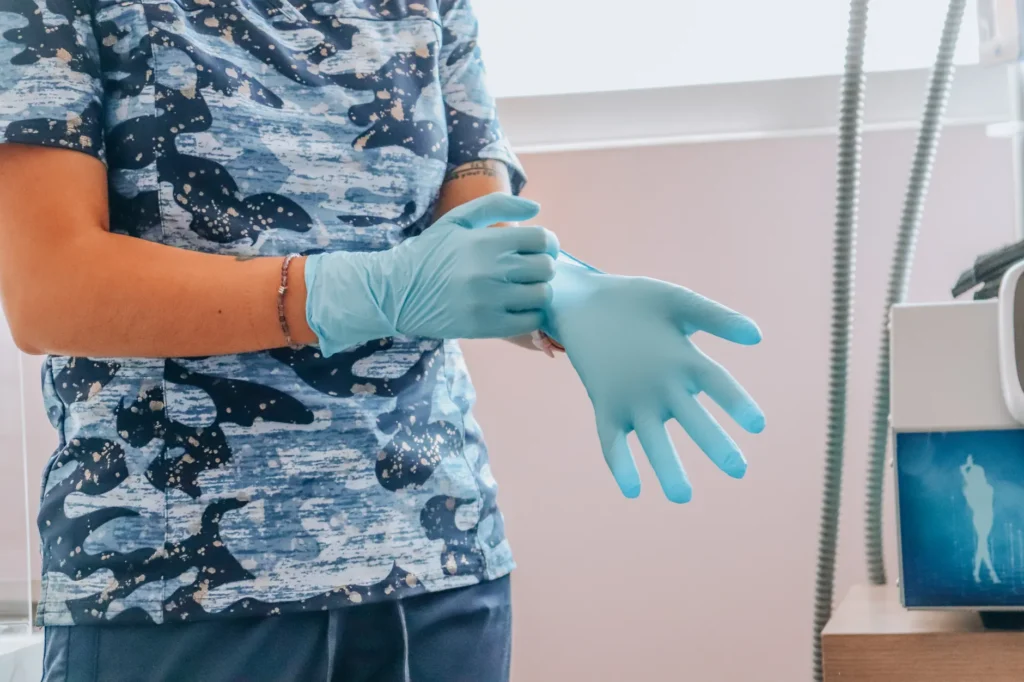
OSHA Bloodborne Pathogens Training Versus State Board CE
A common point of confusion among nursing professionals involves distinguishing occupational safety training from board-mandated educational hours. Occupational Safety and Health Administration standards require annual education on bloodborne pathogens, needlestick prevention, and exposure control plans for healthcare personnel. While this workplace training is essential for clinical practice, it is designed for employment compliance rather than licensure renewal.
State boards of nursing typically require structured infection control nursing CEUs that offer formal contact hours approved by recognized accrediting bodies like the ANCC. An institutional in-service or annual hospital safety video rarely fulfills a specific state continuing education mandate unless the employing facility is also an approved provider. Always check whether your completed training awards formal contact hours with an accredited provider number rather than a simple certificate of completion for facility orientation.
State-Specific Obligations Across U.S. Jurisdictions
Continuing education rules are decentralized across the United States, meaning requirements differ from one state to another. For instance, illinois nursing ce requirements specify mandatory hours on distinct clinical topics, while other jurisdictions maintain different thresholds. APRNs often face distinct advanced pharmacology and infection control mandates compared to RNs and LPN/LVNs.
Furthermore, nurses holding multistate licenses through the Nurse Licensure Compact must generally complete the continuing education requirements of their primary state of residence. Reviewing detailed resources such as Texas guidelines provides insight into how individual boards structure their mandatory reporting cycles. You should also examine regional rules such as Alabama and Michigan administrative codes to ensure full compliance across different jurisdictions.
Checklist for Verifying Course Approval and Board Compliance
Before enrolling in any educational activity, use this structured checklist to ensure your selected coursework aligns with your jurisdiction’s administrative rules:
- Verify Board Accreditation: Confirm that the issuing organization holds active accreditation from the ANCC or an equivalent board-recognized body.
- Check State Administrative Code: Review your specific state board of nursing website for exact hourly quotas and mandatory topic inclusions.
- Distinguish Contact Hours from CEUs: Ensure the course awards formal contact hours rather than unverified facility in-service credits.
- Confirm Certificate Details: Verify that your completion certificate includes your full name, license number, provider accreditation number, and completion date.
How to Document and Store CE Certificates for Board Audits
State boards routinely audit a percentage of renewing nurses to verify compliance with continuing education rules. Proper documentation is your primary defense during an audit, and failing to produce valid certificates can result in disciplinary action or delayed license renewal. You should retain digital and physical copies of every completed certificate for at least one full renewal cycle beyond the expiration date, though some jurisdictions recommend keeping records for up to five years.
When storing your documentation, ensure each certificate displays your full name, license number, provider accreditation details, completion date, and awarded contact hours. Implementing a structured tracking system prevents lost documentation. Reviewing a dedicated nursing ce audit guide can help you organize your records and verify that all administrative criteria are met before submitting your renewal application.
Selecting and Verifying Nursing Infection Control CE Courses
Choosing appropriate educational activities requires evaluating both the content and the credentialing behind the program. When searching for nursing infection control CE courses, always confirm that the issuing organization holds valid accreditation from a recognized body. Relying on unverified third-party platforms without checking board acceptance rules can result in completed hours being rejected during a license renewal audit.
Nurses should also check whether state-specific topics—such as multidrug-resistant organisms, injection safety, or sterilization techniques—are explicitly covered in the syllabus. If you are completing coursework that touches on related topics like implicit bias, verify how your state board categorizes the resulting contact hours toward your total renewal requirements.
Next Steps for Compliant Renewal
Maintaining active licensure requires careful attention to your jurisdiction’s evolving infection control training mandates. By verifying ANCC accreditation, distinguishing formal contact hours from employer in-services, and maintaining rigorous documentation records, you protect your professional standing and ensure seamless renewal cycles.
Frequently Asked Questions
Do all U.S. states require dedicated infection control CE for nursing license renewal?
No. Continuing education mandates vary entirely by jurisdiction. Some states require specific hours of infection control training every renewal cycle, while others bundle these topics into general contact hour requirements or do not mandate them separately.
Can I use hospital in-services for my state nursing CE requirements?
Generally, standard employer in-services or internal training modules do not satisfy state board continuing education requirements unless the facility is an approved, accredited provider offering formal contact hours.
Is OSHA bloodborne pathogens training the same as state board infection control CE?
No. OSHA training focuses on workplace safety compliance and employer regulations, whereas state board continuing education involves structured academic or clinical content evaluated for formal contact hours.
How long must I keep my infection control CE certificates?
You should retain your completion certificates for at least one full renewal cycle beyond your expiration date, though many regulatory bodies and professional advisors recommend keeping records for four to five years in case of an audit.
How many infection control contact hours do I need?
The required number of contact hours depends entirely on your state of licensure, license type, and current renewal period. Always consult your specific board of nursing administrative code for exact thresholds.
About This Article
Written by the Nurse CE Hub Editorial Team. We base state requirements and certification details on official board of nursing and certifying-organization sources, linked within the article.
Rules and fees can change. Confirm current requirements with your state board of nursing or certifying organization before you renew or apply. This article is general information, not legal or professional advice. How we research our content